

How companies in the UK are investing in talent, tech, and digitalisation 2.0
Published on: 02 Jan 2025 | Author: Jorge Uceda

Published on: 02 Jan 2025 | Author: Jorge Uceda
As 2024 wraps up, companies in the United Kingdom are investing in their brands more than ever, with digitalisation and AI adoption accelerating across businesses of all sizes.
Globally, financial pressures are driving companies to do more with less, making outsourcing a vital tool for staying efficient and embracing technological change.
In this report, we’ve analysed over 100,000 projects from the Sortlist platform posted from more than 50 industries to provide a data-backed, accurate, and global view of how companies are investing.
Explore below to see how these strategies shaped 2024 and what trends will define 2025.
In 2024, the UK experienced growing demand for innovation-driven solutions like software development, AI, and events, alongside a strong focus on cost efficiency. Budget reductions, driven by low-code and AI technologies, highlight this shift.
UK businesses are adapting to economic pressures by leveraging technology to sustain growth and stay competitive.
Below are the changes from several expertises in the United Kingdom we’ll see in 2025.
| Rank | Expertise | Project Volume Change | Budget Change | Rank Change |
|---|---|---|---|---|
| 1 | Marketing | 46.43% | 48.72% | = |
| 2 | Branding & Positioning | 46.01% | -11.74% | ↑ 2 |
| 3 | Advertising | 83.79% | -16.89% | ↑ 3 |
| 4 | Online Advertising | -46.36% | 3.16% | ↓ 2 |
| 5 | Social Media | 36.52% | -27.03% | = |
| 6 | Digital Strategy | -27.27% | -22.93% | ↓ 3 |
| 7 | Graphic Design | 43.02% | -27.34% | = |
| 8 | SEO | 230.8% | -79.87% | ↑ 7 |
| 9 | Video Production | 241.85% | -55.08% | ↑ 8 |
| 10 | Website Creation | 59.9% | -11.73% | ↓ 1 |
| 11 | Web Application | 17.98% | -13.13% | ↓ 3 |
| 12 | Event | 137.95% | 69.03% | ↑ 7 |
| 13 | E-commerce | 10.28% | -64.36% | ↓ 3 |
| 14 | Public Relations (PR) | 33.89% | -8.5% | ↓ 2 |
| 15 | Copywriting | 39.96% | 35.02% | ↓ 2 |
| 16 | Mobile App | 31.46% | 18.52% | ↓ 2 |
| 17 | Influencer Marketing | -0.39% | -34.83% | ↓ 6 |
| 18 | Software Development | 91.13% | -28.96% | ↑ 4 |
| 19 | Email Marketing | 15.52% | -70.99% | ↓ 4 |
| 20 | 3D | -8.11% | -52.07% | ↓ 1 |
| 21 | Content Strategy | -12.95% | 26.67% | ↓ 4 |
| 22 | Media Planning | -3.5% | 28.12% | ↓ 2 |
| 23 | Photography | 286% | -3.3% | ↑ 6 |
| 24 | Ergonomy (UX/UI) | 20.27% | -77.75% | = |
| 25 | Artificial Intelligence | 1003% | -16.57% | ↑ 10 |
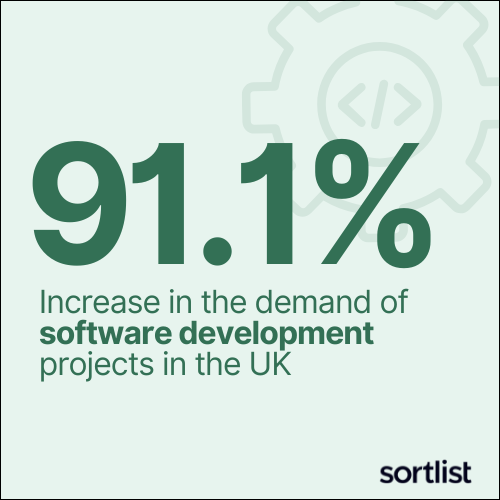
In 2024, software development project volume in the UK grew by 91.13%, highlighting strong demand, though budgets dropped nearly 30%.
This trend coincides with the boom of low-code and no-code technologies.
2024 saw a 197.53% rise in funding of no-code platforms companies compared to 2023. Also, the global no-code development platform market size was valued at $16 billion in 2021 and is projected to reach $68 billion by 2028.
Low-code and no-code technologies are reshaping the industry, with 70% of new applications projected to use them by 2023. And the UK government’s £20.4 billion R&D investment in 2024 is set to further boost the sector.
AI will see the greatest shift in 2025; its 10x increase underscores the potential that UK businesses see in this field.
Similar to software development, AI budgets fell by 16.57%. The proliferation of AI tools and platforms has driven down costs, and has made AI more accessible to a broader range of businesses.

The AI craze will see no end in 2025, since the UK government has introduced a National AI Strategy to position the country as a global leader in AI innovation.
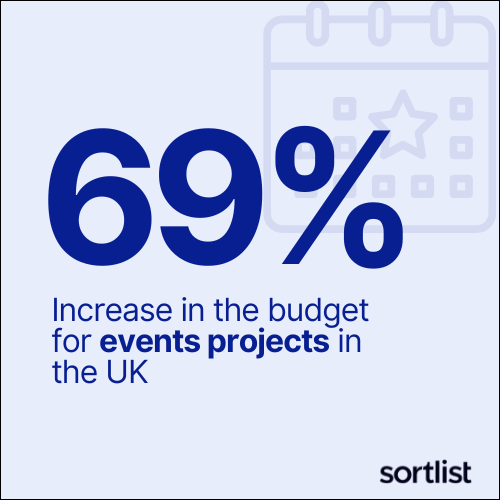
Events is an exploding service in the United Kingdom, in both volume of projects and their budgets; it has seen an increase of 140% in number of projects and a skyrocketing growth of 70% in their budgets.
The lifting of pandemic restrictions has endowed the events industry in the UK with a strong resilience, so much that it generated £61.653 billion in 2024. That resurgence has been supported, among other things, by innovations in technology; more than 9 in 10 event marketers believe their virtual and hybrid events have been successful.
| Rank | Sector | YOY Growth | Rank change |
|---|---|---|---|
| 1 | E-commerce | 7.74% | = |
| 2 | Arts & Crafts | 7.34% | ↑ 2 |
| 3 | Marketing & Advertising | -12.89% | ↓ 1 |
| 4 | Beauty | -9.33% | ↓ 1 |
| 5 | Accounting | 41.57% | ↑ 3 |
| 6 | Sports | 2.28% | = |
| 7 | Fashion | -6.36% | ↓ 2 |
| 8 | Automobile | 23.17% | ↑ 1 |
| 9 | IT Software & Services | 8.60% | ↓ 2 |
| 10 | Education | 22.30% | ↑ 1 |
| 11 | Agriculture | 22.73% | ↑ 2 |
| 12 | Banking & Finance | 40.37% | ↑ 6 |
| 13 | Internet | -7.93% | ↓ 3 |
| 14 | Entertainment | 12.40% | = |
| 15 | Music | 5.47% | = |
| 16 | Real Estate | -5.88% | ↓ 4 |
| 17 | Travel & Leisure | 24.75% | ↑ 3 |
| 18 | Media | 23.76% | ↑ 3 |
| 19 | Architecture | 34.78% | ↑ 3 |
| 20 | Construction | 5.98% | ↓ 3 |
| 21 | Hospitals & Healthcare | -3.28% | ↓ 5 |
| 22 | Restaurants | -11.43% | ↓ 3 |
| 23 | Retail | 24.00% | = |
| 24 | Beverages | 58.62% | ↑ 1 |
| 25 | Luxury Goods & Jewelry | 13.51% | ↓ 1 |
Despite being a traditionally slow-moving and heavily regulated industry, the UK’s finance sector will be increasingly relying on outsourcing in 2025, with banking and accounting driving the surge.
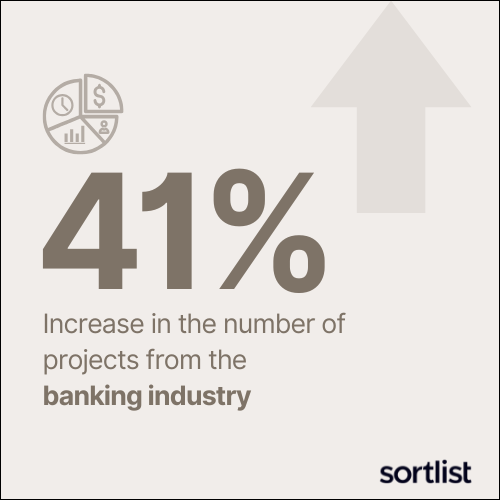
Banking saw a 40.37% rise in outsourcing in 2024, fuelled by AI adoption and machine learning, despite ongoing security concerns. The National Cyber Security Centre (NCSC) has stepped in with guidelines to ensure safe AI development and deployment. At the same time, Brexit-induced regulatory complexities continue to push firms toward outsourcing compliance to specialists.
Accounting also grew by 41.57%, with companies seeking cost efficiencies and expertise to navigate evolving regulations. Outsourcing in this sector can reduce finance department costs by 30-50%, a compelling factor as the Financial Reporting Council’s 2024 overhaul of standards impacts millions of businesses.
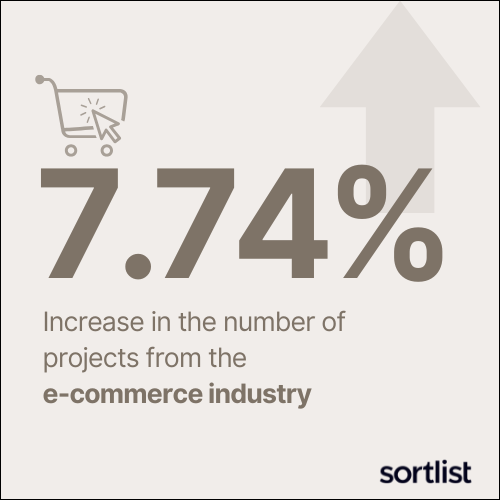
The UK’s e-Commerce sector will continue to thrive in 2025, as shown by the 7.7% increase in demand from Sortlist data.
Just the online sales during the Black Friday/Cyber Monday period last month reached £3.63 billion, a 5.2% year-on-year increase. This growth is further supported by projections that e-commerce market volume in the UK will amount to $188.80 billion by 2029.
It’s no surprise, really: the UK has the largest e-commerce market in Europe, ranking among the biggest globally. In any given year, the average online spending per shopper is about $4,679. And 55% of those shoppers are Gen Z users.
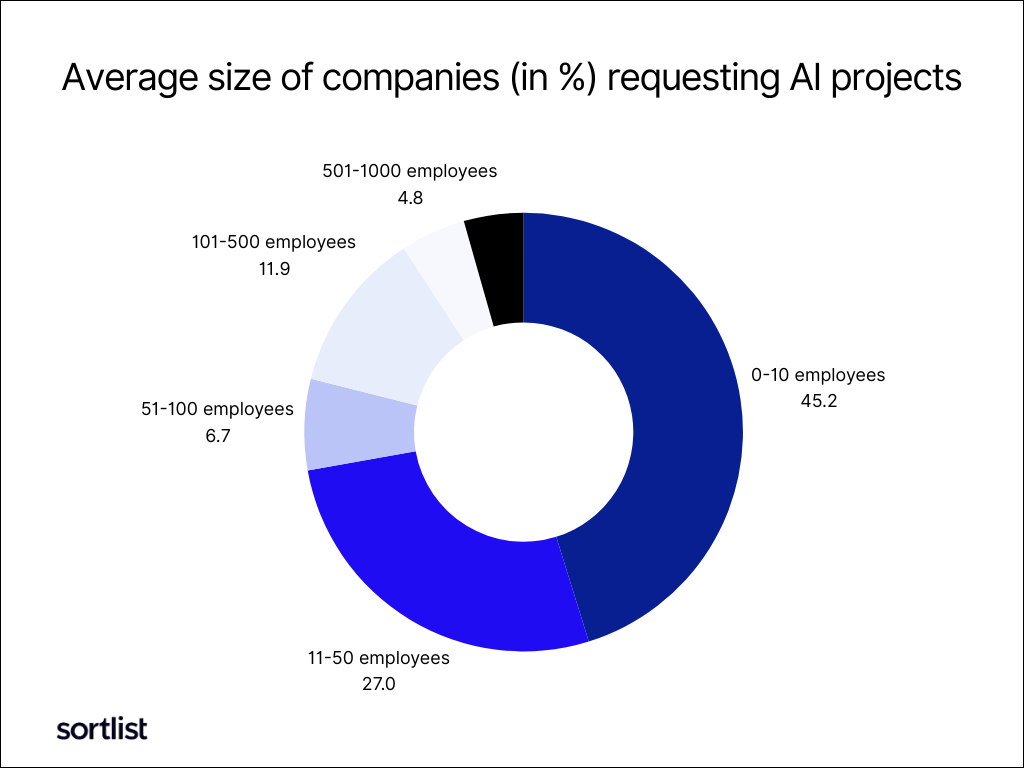
Small and medium-sized businesses (SMBs) dominate AI service requests, with nearly 75% coming from companies with 50 or fewer employees in 2025.
Eager to optimise and automate processes while staying competitive, these businesses lack the in-house expertise for AI development, driving them to Sortlist for outsourcing solutions.
10% of AI requests focus on customer service, with 75% of those coming from SMBs with under 50 employees.
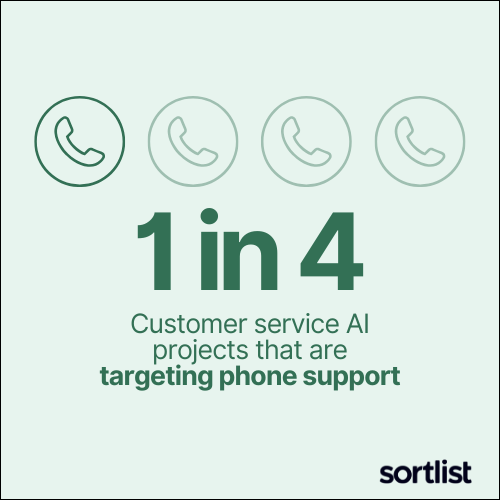
While chatbots remain popular, 25% of customer service AI projects now target phone support, from software firms seeking 24/7 AI systems to logistics companies automating dispatch operations.
25% of AI projects from SMBs focus on personalisation at scale, creating tailored experiences for every user. From training apps to AI-generated interior designs and custom travel recommendations, these solutions automate expert-level tasks using zero-party data, delivering high-quality results efficiently.
Personalisation use cases can be categorised in three different tiers:
As users of LLMs like ChatGPT become more and more used to extremely precise responses to their queries, this kind of fully individual experience will become expected. Those same technologies are being integrated into the products used by business owners.
Smaller, more agile companies are using personalised digital experiences to stand out from the crowd: we’ve seen real estate businesses offering targeted recommendations for customers, a personalised web portal for wealth management, and individually tailored learning paths for online study.
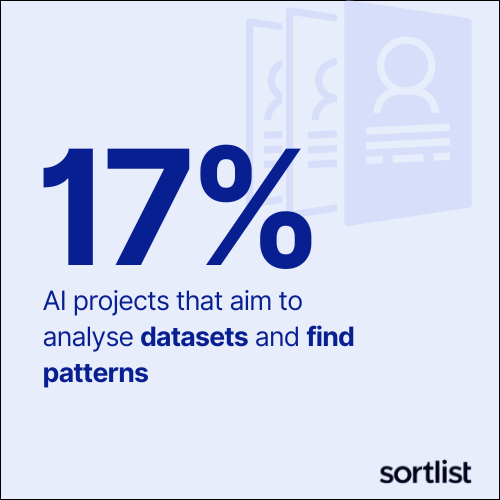
Sortlist data reveals that 17% of all projects come from companies investing in AI initiatives aimed at analyzing large datasets, uncovering patterns, and enhancing decision-making processes to drive efficiency and growth.
Some other use cases include:
Companies seeking AI partners on Sortlist prioritise scalability, process efficiency, and profitability without increasing headcount. This shift aligns with a broader trend since 2022, as businesses focus on cost efficiency over aggressive growth amidst inflation and cautious investment environments.
With rising supply chain costs squeezing budgets and cautious investors reducing funding, scalable and efficient solutions are key. While requests for ROI and cost optimisation have dipped 25% since 2023, they remain 370% higher than in 2021, underscoring their continued importance. Selecting the right partner is critical to navigating these challenges.
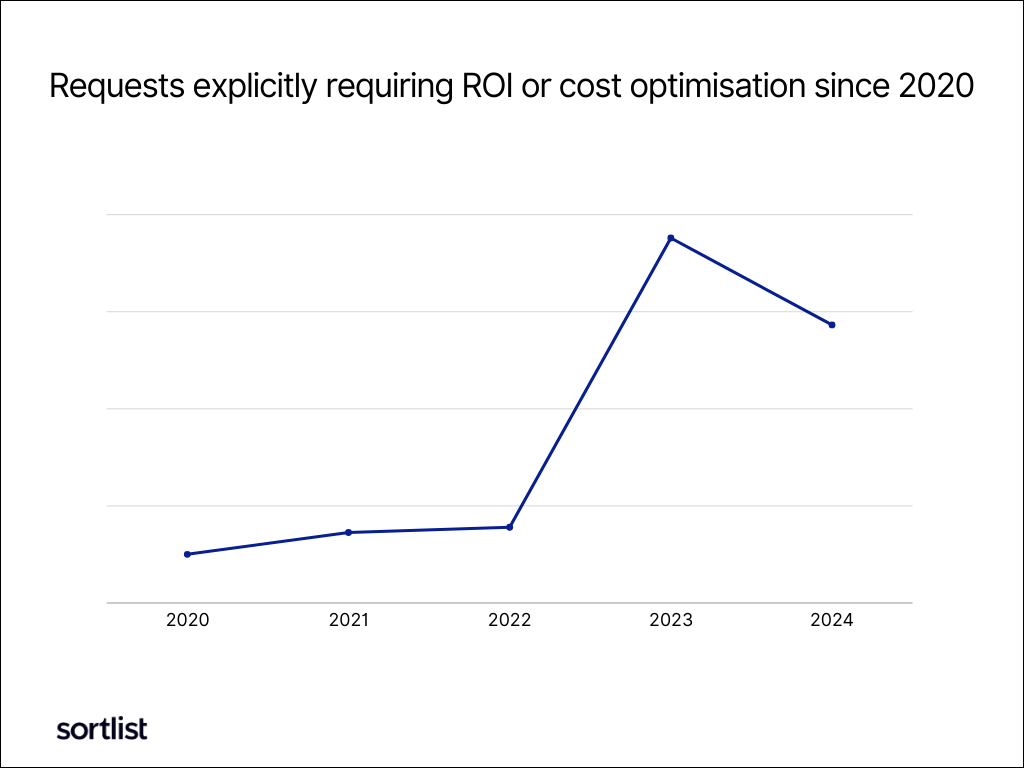
Make no mistake: companies are still laser-focussed on profitability when looking for an agency or consultancy, with marketing the task that’s most under pressure to prove ROI.
Marketing Direct ROIDigitalisation is evolving from simply having a website to providing personalised, logged-in experiences through web apps.
As businesses aim to enhance client satisfaction with tailored journeys and data-driven customisation, demand for web app developers on Sortlist has grown twice as fast as for traditional websites since 2019.
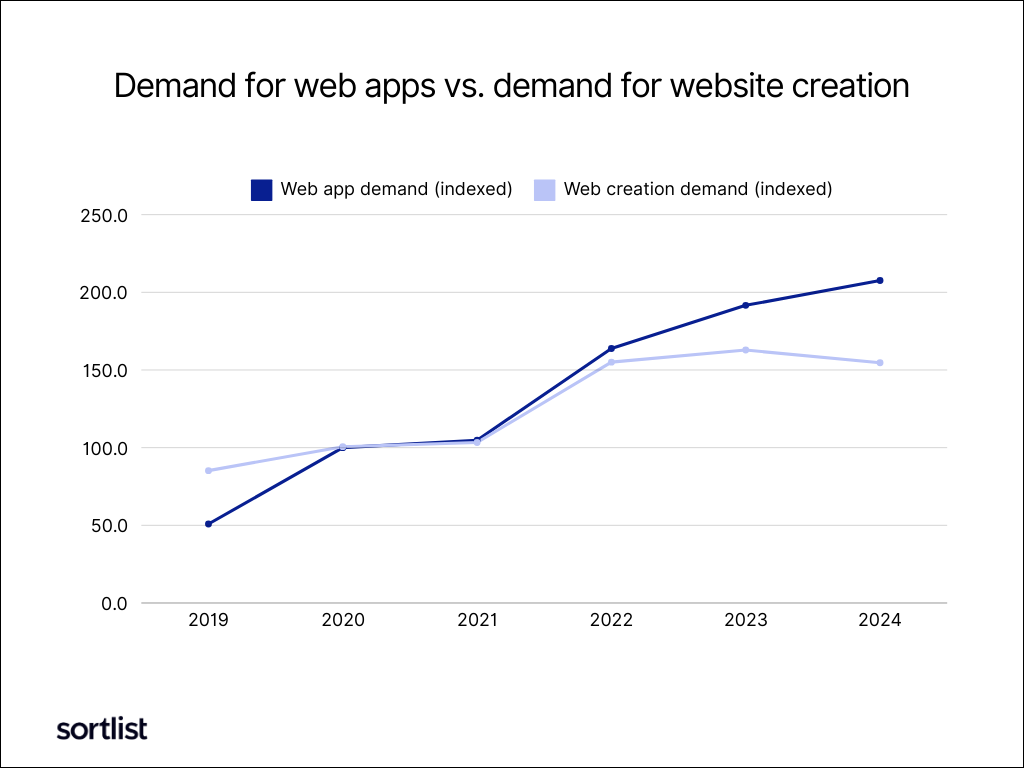
It’s a symptom of consumer demand for personalised experiences, based on their data, and akin to what we saw as a key driver of AI adoption among SMBs.
Over the past year we’ve seen web app projects like:
Which city offers the skills you need?
To answer this, we analysed 70,000 providers on Sortlist, calculating an “expertise score” based on the number of validated providers per capita and their specialisations, normalised for city size. Note: this score reflects specialisation weight, not the total number of providers. For that, you can use the Sortlist search function.

While London is the centre of the UK’s economic life, and any agency you need will be found there, it’s Bristol that stands out on a per-capita basis, especially when it comes to SEO and PR.
As of 2024, Bristol is the strongest performer of all of the UK’s large cities. Between 2004 and 2021, Bristol’s economy went from 1.3% of UK GDP to 1.5% in 2022, becoming a more important part of the national economy.
And the digital, science, and tech sector in Bristol grew at double the speed of the national average, constituting 13.4% of all jobs in the city.
Both Edinburgh and Cardiff both weigh heavily towards Events agencies; it’s perhaps one of the most regionally-dependent services. Edinburgh has built an international reputation in sectors such as life sciences, technology, and finance, and Cardiff is also known to be a popular destination for events, hosting major international sporting matches and thousands of concerts and arts events.
Over the years, the shifting trends in how companies manage their workload have become apparent—with ever more turning to a network of external partners to drive growth and minimise long term risk.
To illustrate the point, we’ll examine these trends by comparing variations in the number of outsourced projects posted on Sortlist and the job postings on Indeed from 2020 to 2025 (taking 2020 as a baseline for both).
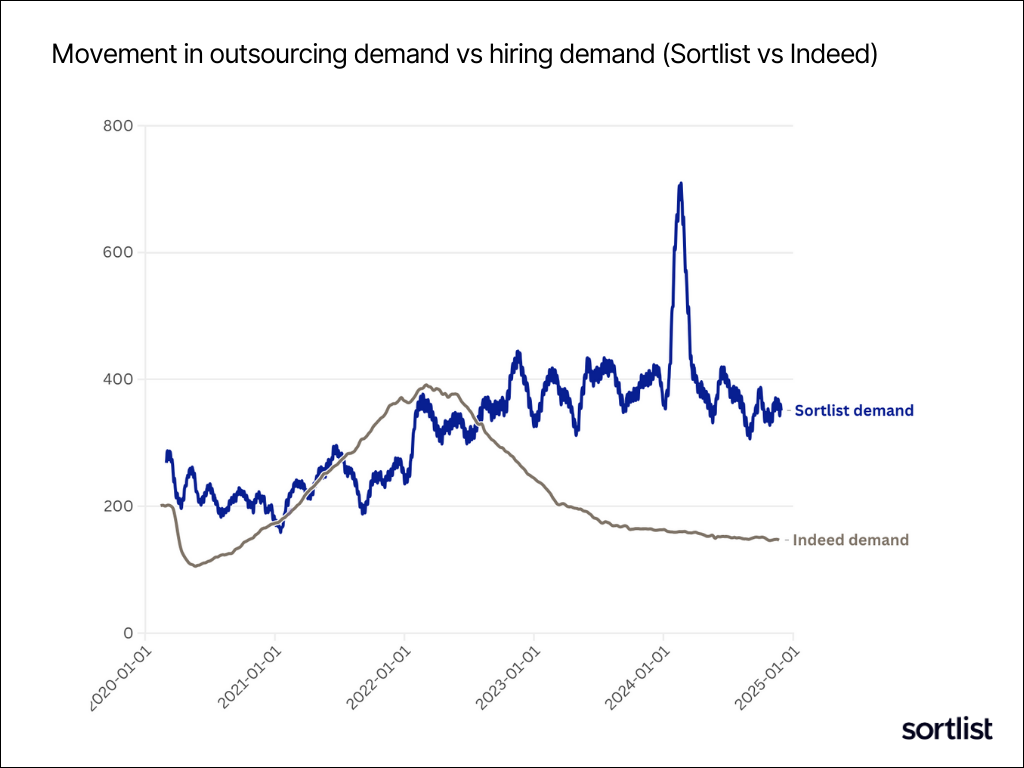
Perhaps unsurprisingly, the two seem to be two sides of the same coin. While in-housing grew steadily through 2021, as consumer confidence returned post-covid, it peaked during 2022, and has declined since, in line with a more complex economic environment.
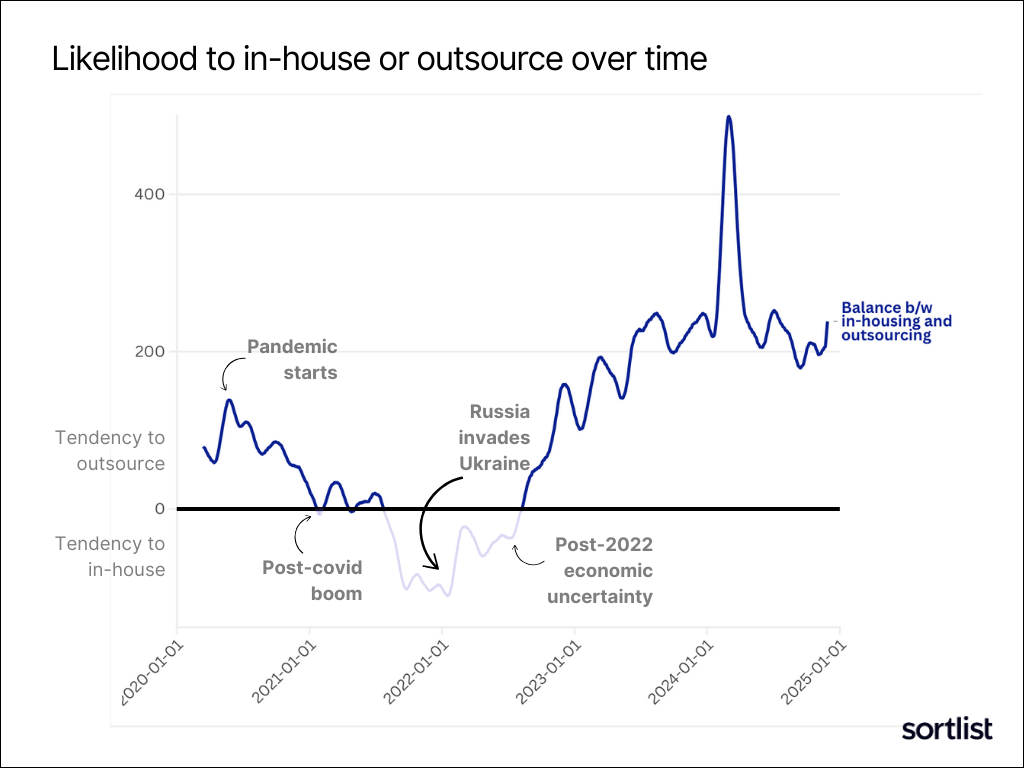
We see that, indeed throughout 2021 and into 2022, a time of greater confidence, in-housing predominated. While in 2020 and especially the second half of 2022, 2023 and 2024, businesses looked to continue to grow in an uncertain environment with the help of external providers.
And that’s in line with the predicted global spending on outsourcing in 2025, which sits at around $1,140 billion.
That’s the role of Sortlist in this fragmented business scenario—when companies outsource their projects to expert providers they avoid the misplacement of resources and reduce risk, all while securing the required talents for their projects.
Is outsourcing marketing services cheaper than hiring in-house experts?
To find out, we analyzed 2024’s top services, factoring in gross salaries plus additional costs like taxes and social security to reveal the true expense of in-house hires.
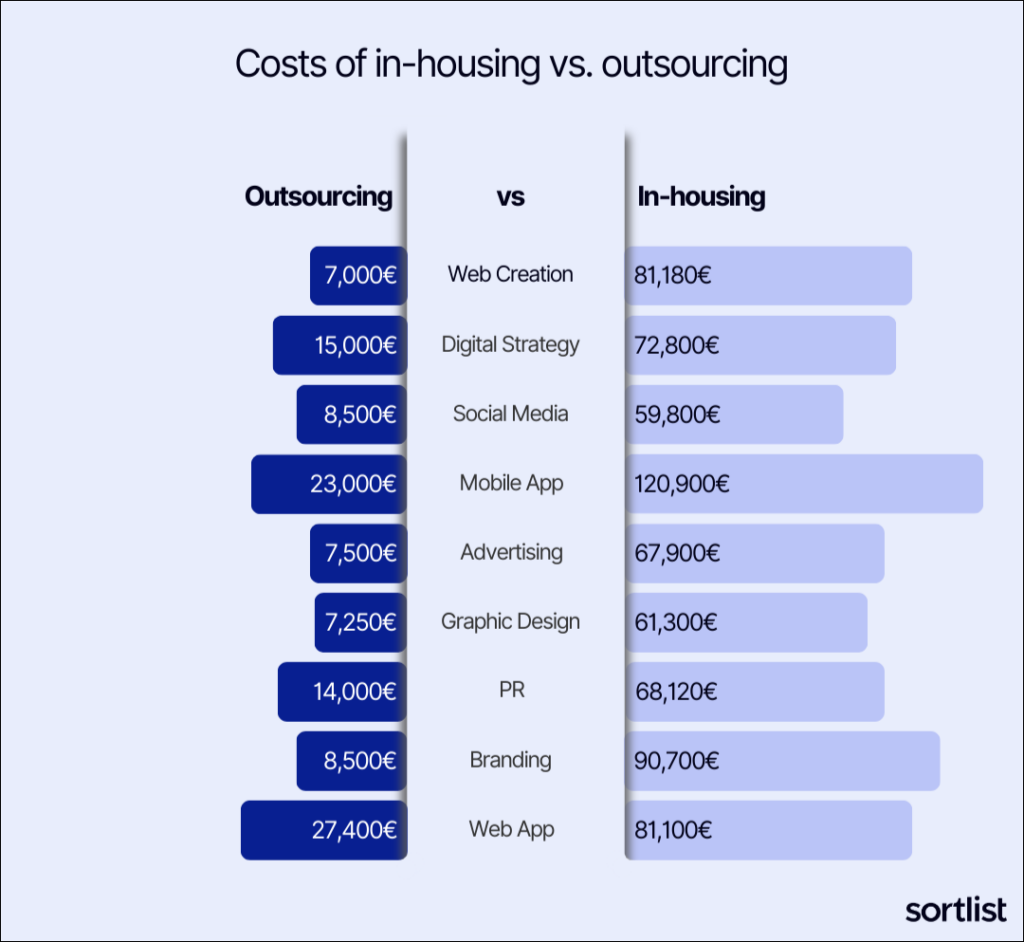
Across all expertise areas, the cost of outsourcing a project is significantly lower than the annual salary of hiring an in-house employee.
For example, outsourcing a mobile application developer costs $23,000, while the in-house salary is $120,889—nearly 5.3 times more.
Roles with higher in-house salaries, such as mobile application developers ($120,889) and brand managers ($90,697), see significant cost savings when outsourced, at $23,000 and $8,500 respectively.
These figures are meant to give companies an idea of costs on a per-project basis. While an in-house employee may yield more impact than a single project, the numbers prove that outsourcing allows to cover specific projects rather than committing to ongoing annual salaries, making it a cost-efficient choice for businesses needing occasional expertise.
Outsourcing is now a key strategy for businesses, with the market expected to reach $807.91 billion in 2025. Beyond cost savings, companies seek flexibility and expertise to stay competitive, with 59% prioritising performance and nearly half valuing adaptability.
This is where Sortlist makes a difference. By connecting businesses with their ideal service providers, Sortlist helps you avoid resource mismanagement, minimise risks, and achieve high returns on your projects. Post your project on Sortlist today and find the perfect partner to drive your business forward.
The figures related to demand and pricing in this report are derived from data collected on the Sortlist platform, from both agencies and projects.
Additionally, data on professional salaries and the number of job vacancies were gathered from Indeed’s salary guides and then compared with our data on project outsourcing costs.
The Sortlist Data Hub is the place to be for journalists and industry leaders who seek data-driven reports from the marketing world, gathered from our surveys, partner collaborations, and internal data of more than 50,000 industries.
It is designed to be a space where the numbers on marketing are turned into easy-to-read reports and studies.