
The Essential Media Planning Guide: Strategies and Best Practices for Effective Campaigns

In today’s world, marketers have many different ways to communicate with their audience and promote a particular brand, product or service. However, the task of planning, distributing and analysing results is becoming more complicated every day – that’s where media planning comes in. Our media planning guide explains the elements and steps involved in the process. As well as practices and tips to help you succeed.
Let’s get started and make the most of every marketing channel you’re active in.
What Is a Media Plan?
A media plan is basically a document that organises and outlines the audience you want to target with your marketing efforts, the channels you want to use, the timing of each piece, and the messages you want to send.
It’s imperative that when you create your media plan, you take into consideration factors such as target audience, marketing budget, conversion goals, frequency, and what success looks like for that specific campaign.
Types of Media Plans
There are three types of media plans you can work with. It’s important to understand them and their costs and benefits so you can make an informed decision about which one to work with. Here’s a quick rundown of them.
Paid Media
Basically the most common form of advertising, as it involves the practice of paying for your brand’s advertising space. Pay-per-click campaigns and display ads are great examples of this, and a great way for brands with low follower counts to increase their reach and exposure.
Owned Media
The most organic way to attract prospects who are naturally interested in your products and services, and convert them into customers by appealing to their wants and needs. It’s important to note that owned media refers to any form of marketing or communication that is owned by your company, such as your website, blog, or social media platforms.
Earned Media
This refers to the mentions and publicity your brand receives from both consumers and third-party news outlets. It is particularly valuable because it means that people outside your organization are talking about your brand, products, services and efforts, making them more credible to any reader out there. Keep in mind that you can always create a specific strategy to earn more media coverage and generate positive press.
Benefits of a Media Plan
With that in mind, you may be wondering why this is important or necessary for your brand. We can boil it down to 4 key benefits:
- Helps you stay on top of your budget. As a marketer, you need to have a clear understanding of how much money you have to spend on each campaign and how you are going to spend it. A media plan does this for you and helps you keep track of which efforts are underperforming or overperforming. This allows you to make the necessary adjustments and avoid overspending or justify why you need to increase your budget.
- Targets a specific audience. Your brand may have different audiences for different products; working with a media plan lays the groundwork so everyone involved in your campaign clearly understands who they need to target. Most importantly, it outlines how to engage that segment so you can increase conversions.
- Brings consistency to all your marketing efforts. This document is also designed to help your company and brand be consistent in every form of communication. It outlines the fonts, colours, and messaging so everyone can work to provide a consistent user experience for every visitor in every channel.
- Identifies areas for improvement. Your media plan must include a clear statement of what success looks like and a way to measure it. With this information and consistent monitoring and tracking of results, you can identify which efforts are not performing as expected and make timely adjustments. You’ll avoid wasting resources on channels that aren’t performing as expected.
What is Media Planning?
As you can infer, media planning is the process of creating a media plan or outlining where, when and how often you will promote your brand to maximise engagement, conversions and ROI. It’s about creating a roadmap to deliver the right message to customers at the right time, through the right channel, and see engagement.
What are the Objectives of Media Planning?
The goals of a media plan will vary from organisation to organisation, depending primarily on their business objectives. It’s important to understand that media planning utilises a wide range of tactics to either increase brand awareness, generate leads or drive conversions.
Challenges of Media Planning in Advertising
So far, media planning sounds like a bulletproof option for every marketing team out there. But the truth is, because it involves so many details, it comes with its own set of challenges. Let’s take a closer look at them so you can understand them and try to avoid or overcome them.
- Changing media marketplace. With technological advancements and new trends emerging almost daily, it’s hard for marketers to keep up. Look for ways, such as following and subscribing to media-related newsletters, that your team can learn instantly about new ad formats, new trends, and new opportunities.
- Media planning burnout. A common fear among marketers is burnout, and as a leader, you need to look for ways to prevent and assess it in your organisation. AI tools are a great option, especially for researching competitors, finding new audiences, and identifying new opportunities.
- Consumer and platform targeting. One of the biggest challenges in media planning is knowing your audience at a granular level so you can identify the platforms you need to use to reach them.
- Budget allocation. Limited flexibility prevents marketers from making necessary changes when they see that a channel or message is underperforming. Make sure you give your team room to make the necessary adjustments and maximise your budget. All within budget, of course.
Media Planning vs. Media Buying
As we delve deeper into our media planning guide, it’s imperative that we address the confusion many marketers have with these two concepts. While they may sound similar, in practice they are not.
Media planning, as we explained earlier, is the process of creating a roadmap to deliver the right message to customers at the right time, through the right channel, and see engagement. Media buying, on the other hand, refers to the process of buying ad space across channels and platforms. It includes bidding strategies, negotiations, and more.
In other words, media buying is an outgrowth of your media plan. While you can have media buying without a media plan, you should not have one without the other. It will only hurt your marketing budget and efforts because there is no strategy behind it.
Media Planning 101: What Are the Key Elements of Media Planning?
Before you begin creating your media plan, there are a number of elements you need to clearly identify, as they form the foundation of your plan and play a key role in its success. Let’s take a look at what they are and the questions you need to ask yourself or your team of media planners to fill them out.

- Target audience: Who is the message intended for?
- Budget: How much money do you have?
- Conversion goals: What action do you want your target to take?
- KPIs: What are the key performance indicators to track success?
- Frequency: How often should your message be delivered?
- Reach: How many people do you need to reach?
What Are the Steps in Media Planning?
Once you have the answers, it’s time to start working on your plan. This media planning guide will walk you through all the steps you need to take. Make sure you devote enough time, attention and resources to each one.
Step 1: Conduct Market Research
As a media planner, the first step you will want to take is to conduct market research and deepen your understanding of what your competitors are doing, who your target audience is, and who your current customers are. Your findings will be the springboard for determining the channels you will use, the messages you will deliver, and the timing of your communications.
Once you’ve gathered all the data, you’ll want to build your buyer personas. Be sure to include demographics (age, gender, location, income, etc.), background (job, career path, lifestyle), identifies (communication preferences, social media platforms), goals, and challenges. Our “How to Effectively Increase Sales With the Right Buyer/Sales Persona” can help you understand how to build your buyer personas in detail.
Step 2: Determine Media Goals and Objectives
Your second step would be to determine the goal or objective you want to achieve. Make sure you follow the SMART (Specific, Measurable, Attainable, Relevant, Time-Bound) framework so you can track progress and achieve success.

Examples of media plan goals include:
- Gain 2,000 followers on Twitter, Metaverse, and Instagram in the next three months.
- Increase online engagement by 5% in the next quarter.
- Increase brand awareness among your target audience from 30% to 45% in six months.
- Generate 500+ qualified leads for a product launch within seven months of launch.
You want to set goals that align with your overall business objectives. Don’t let our examples prevent you from setting the right ones for your plan and your business.
Step 3: Set Your Media Plan Budget
For some marketers, setting a budget feels like guesswork. It doesn’t have to be that way for you. We strongly encourage you to look at how other companies in your industry allocate their budgets. Take a close look at how much they spend on a monthly basis, and where and how they spend it.
Start from there and consider every potential cost. This means that if your plan may require display advertising, social ads, and sponsored social media posts, then they should all be included. Ask the media buyer for help; they should be able to give you reasonable numbers.
Step 4: Choose the Media Planning Tools You Will Work With
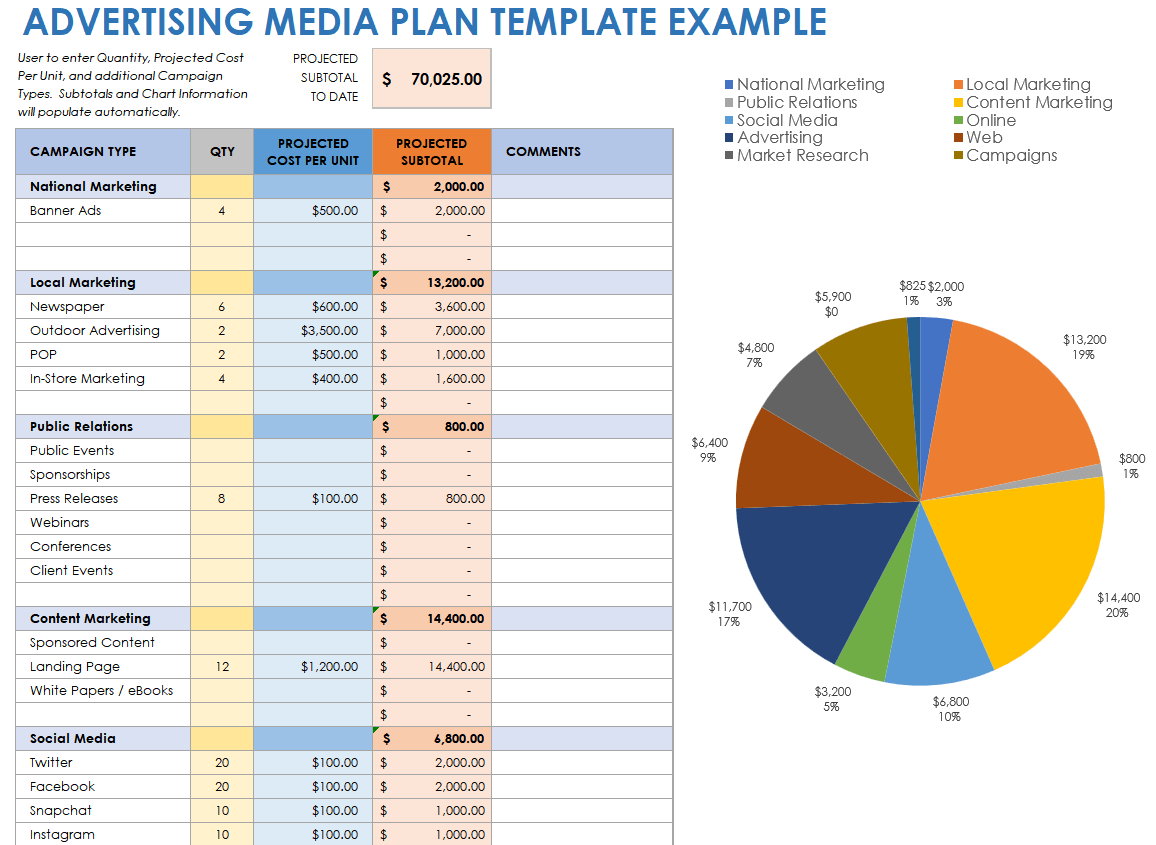
To grow your audience and achieve your media planning goals, it’s important to work with the right tools, including media planning templates and software.
A quick Google search can help you find some great paid and free media planning templates. We highly recommend checking out the options from Miro, HubSpot and Smartsheet.
As for software, you need to look for one that will help you research, analyze and optimize your strategy. Some examples include Bionic Media Planning Software, Kantar SRDS Media Planning Platform, Media Plan HQ and Quantcast. Before choosing one, make sure it can scale with your business and that you can afford it in the long run.
Step 5: View Historical Data
To properly guide your media plan strategy, you want to take a look at all the marketing efforts you’ve done in the past. Check the results of your Facebook business page, your Instagram profile, your website performance. Go all in, as these data points will feed you and help you make informed decisions as you brainstorm your next campaigns.
Step 6: Choose the Right Mix of Media Channels
According to the Influencer Marketing Hub, the top 5 marketing channels with the highest ROI are social media platforms (Instagram, Facebook, YouTube, and Tiktok – in that order), email marketing, SEO, and omnichannel marketing. While this data is valuable, you can’t base your marketing mix on it. You need to take it into account and compare it to what your target audience prefers.
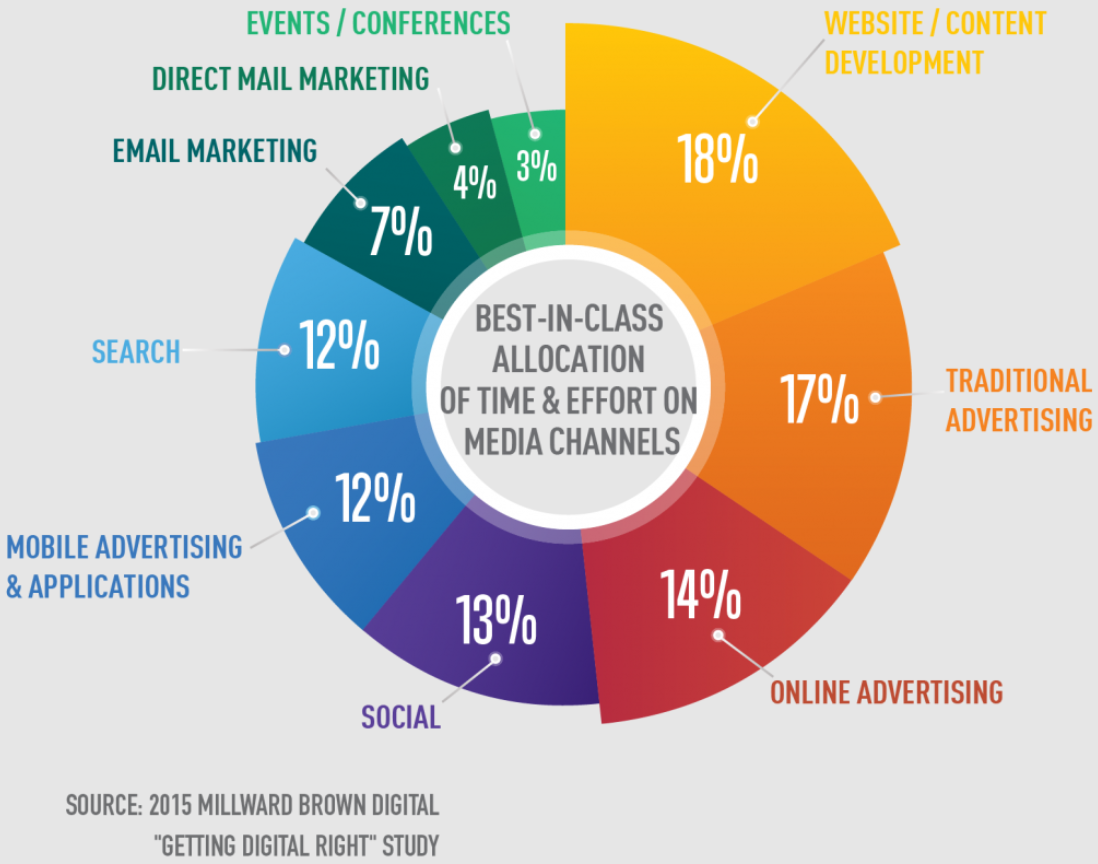
You don’t want to spend hundreds or thousands of dollars on Facebook if your audience isn’t there. On the contrary, the whole goal of this research and planning process is for you to be able to allocate all your resources to the channels where you will reach and convert your audience.
Step 7: Create Your Media Plan Using a Template
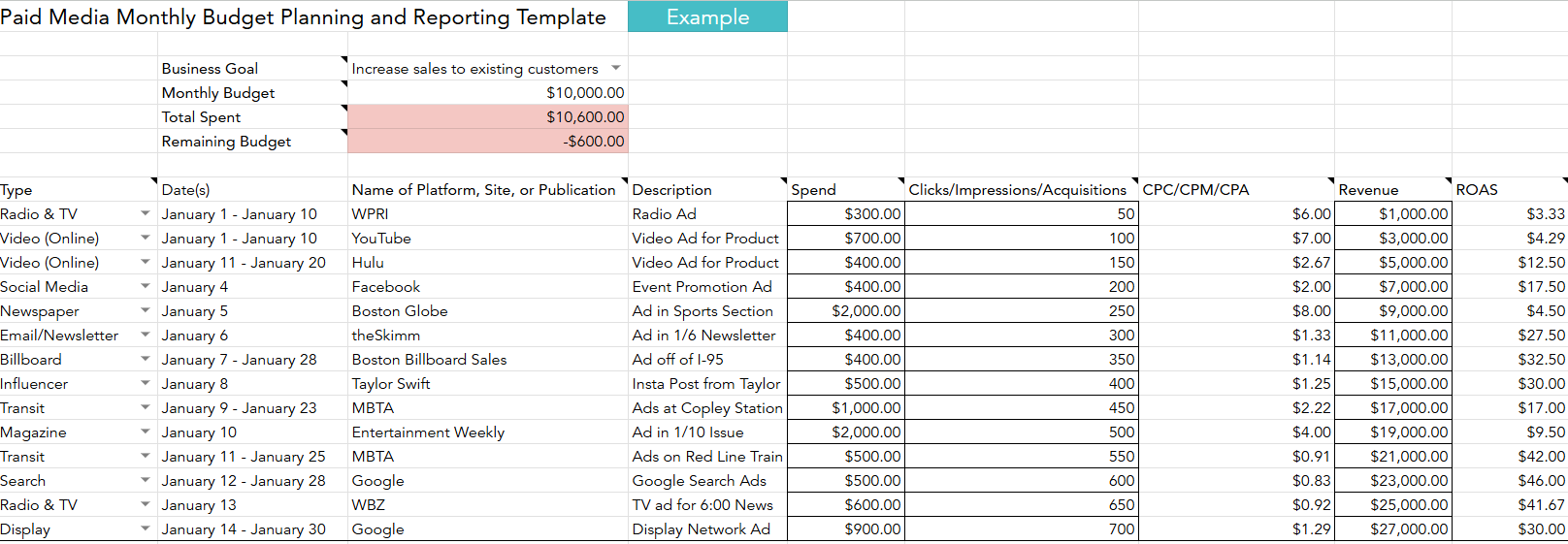
As we said, there are plenty of free and paid media plan templates online. You can search for one or simply create your own using Excel or Google Sheets. If you choose the latter, be sure to include the following fields:
- Monthly goal
- Business budget
- Total spend
- Remaining budget
Next, you want columns for:
- Type of media
- Dates
- Name of platform, site or publication
- Description
- Spend
- Clicks
- Impressions
- CPC/CPM/CPA
- Revenue
- ROAS
Then you want a special section where you can compare both the average spend for each media type and the total revenue generated by each.
Step 8: Develop Your Media Planning Strategy
Once you have created your template, you need to start filling it out:
- Start by adding the media assets you want to use and where you want your ads to appear. Keep in mind the media mix you selected in step 6.
- Decide on the creative. You will need to work with your copywriters to come up with the perfect message that will resonate with your audience and inspire them to take action.
- Set the timeline for your media plan strategy. Use the competitive data you gathered in step 1 to determine the best times to run your campaign.
- Add information about how much budget each action item will require. Make sure it does not exceed your budget.
- Be specific about the KPIs you will use to track your performance.
Step 9: Implement Your Media Plan
Once you’ve reviewed your media plan strategy and you and your team agree it’s perfect, it’s time to put it into action. This means setting up each individual message on each platform and making the necessary edits to your media content to ensure that it matches your target audience, fits your budget, timeline and schedule, and is effective.
Step 10: Analyse and Optimise Campaign Performance
But your work isn’t done. You need to closely track and monitor its performance. That way, you can quickly identify any message, media content, call to action, image or ad that is not working as expected and make the necessary adjustments to help your brand achieve its goals (brand awareness, lead generation, conversion, etc.).
Media Plan Example
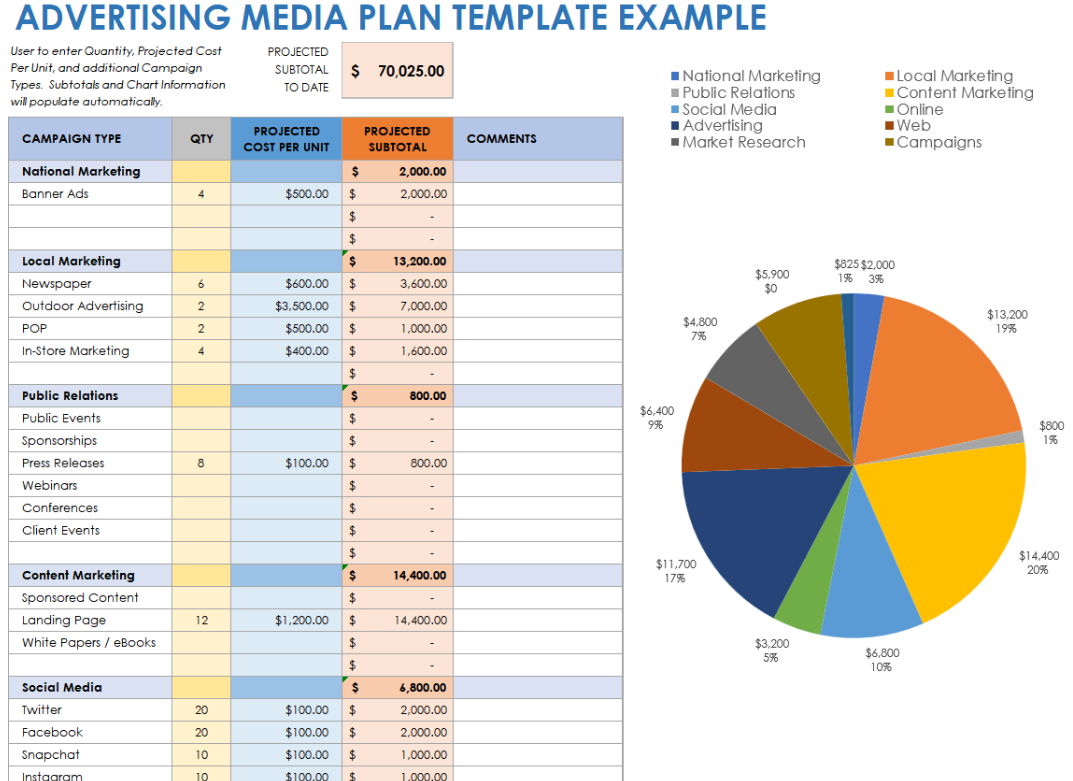
There are many different media plan campaigns you can create. Whether it is for your digital advertising efforts, your SEO activities (including your blog post), or your social media advertising, this example serves as a reference that you can quickly adapt and replicate to increase your engagement and conversion rates.
Key Takeaways
- Purpose of a Media Plan: A media plan organises and outlines the target audience, chosen channels, timing for each piece, and the messages to be delivered in a company’s marketing efforts.
- Benefits of Media Planning:
- Budget Management: It helps stay on top of budget allocation, preventing overspending and justifying increases.
- Targeted Audience: Defines specific audience segments, enhancing engagement and conversion rates.
- Consistency in Marketing: Ensures consistent branding and messaging across all channels.
- Identifying Improvement Areas: Clearly defines success metrics and allows for timely adjustments based on performance monitoring.
- Setting Goals and Objectives: Media planning involves setting SMART goals that align with broader business objectives, ensuring measurable and attainable targets.
- Essential Elements: Key components include identifying the target audience, establishing a budget, defining conversion goals, determining KPIs, as well as deciding on message frequency and reach.
- Steps in Media Planning: The article outlines 10 comprehensive steps, from conducting market research and determining goals to budgeting, choosing tools, analysing historical data, selecting the right media mix, creating a strategy, and implementing and optimising performance.
Conclusion
As you can see from this media planning guide, this document is an integral part of your marketing success. Not only will it help you better understand your target audience, but it will also help you determine the perfect marketing mix for your brand, as well as the timing and messages you need to send.
However, if you find this process overwhelming, don’t be afraid to ask for help from one of our media planning agencies, they will not only help you gather all the information you need, but they will build a robust plan that delivers results and works towards your overall business goals.